Get upto 30%* off on your First order

Get upto 30% off on your order
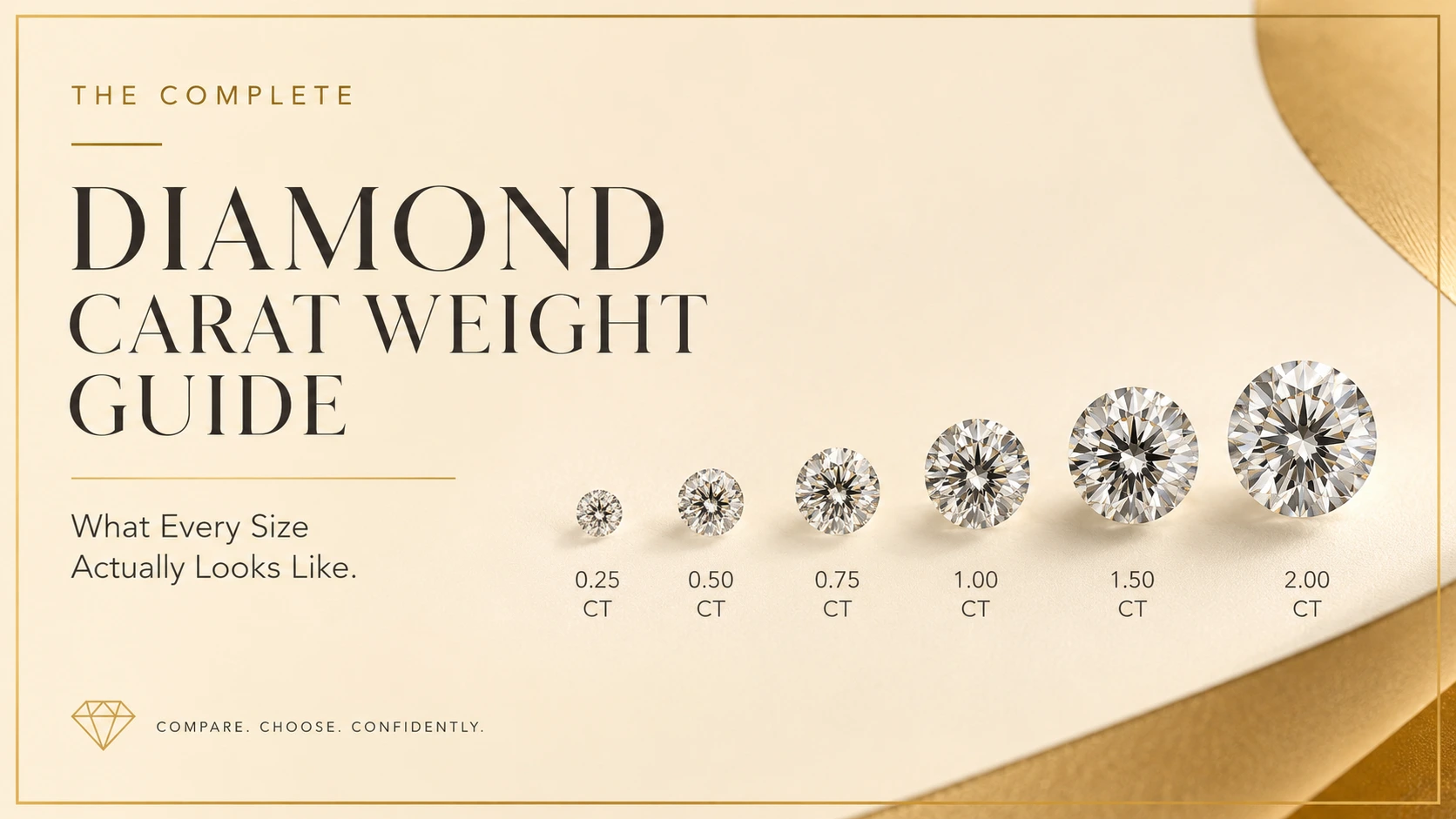
The carat weight of a diamond is the number that captures the eye; however, it is sometimes misunderstood. A carat is a measurement of weight, not size; therefore 2 diamonds of the same carat weight might seem extremely different depending on form. This guide explains how diamond carat weight is really measured, how shape affects how large a diamond seems, the best price ranges and real sizes of each cut you can buy.
This guide pairs well with our lab-grown vs natural diamonds guide and our 4Cs of diamonds guide if you have not read those yet.
What Diamond Carat Weight Actually Measures
Carat is only a measure of weight. One carat is equal to 200 milligrams or one-fifth of a gram and therefore it doesn’t tell you how big a diamond will look on the hand. The apparent size of a diamond is also impacted by its shape, length-to-width ratio, and depth of cut. This is what you see of the diamond, not just the carat weight. That’s why two grading reports can have the same carat weights but stones that are visibly different sizes.
This misconception is common enough to deserve a clear statement. A diamond carat size chart is really a shape-categorized chart, not a single universal measurement. The answers to both questions must differ because a jeweler who gives a carat weight is telling you how much the stone weighs on a scale, not how it looks in your hand.
Why the Same Diamond Carat Weight Can Look Different Sizes
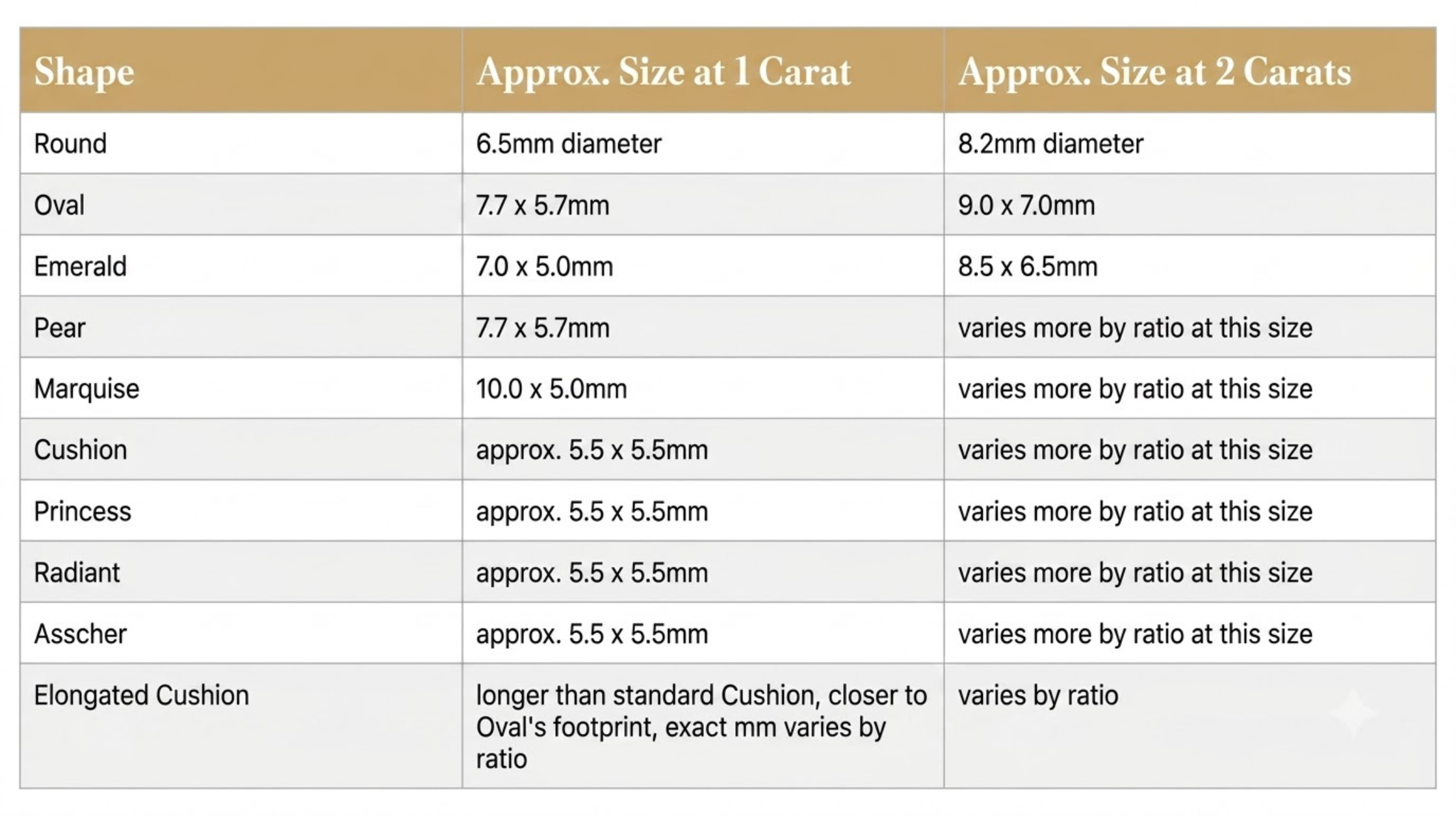
And size increases volume. The volume of a diamond goes up cubically, not linearly, with size. That one piece of information goes a long way toward explaining the confusion. A 2-carat round diamond is exactly twice as massive as a 1-carat round diamond, but only about 26 percent wider – about 8.2mm in diameter, against 6.5mm. That’s not double the diameter you might expect from the weight in carats. If you’ve ever wondered what the difference in size between a 2 carat diamond and a 1 carat diamond is, the correct answer is 26 percent greater, not twice the size.
This image alters the shape considerably farther. They distribute their weight across a longer perimeter rather than a tight circle such as in a round diamond; therefore, their look is larger than a round diamond of the same carat weight. Square or near-square designs, such as princess, cushion, radiant and asscher, generally look smaller than round or oval shapes of the same weight, since more of the mass is concentrated in depth instead of spread. What Does A 1 Carat Diamond Look Like? The real answer is, it is reliant upon the shape you are imagining. A 1 carat round and a 1 carat marquise have the same weight but not the same shape.
Carat vs. Karat: Two Different Words
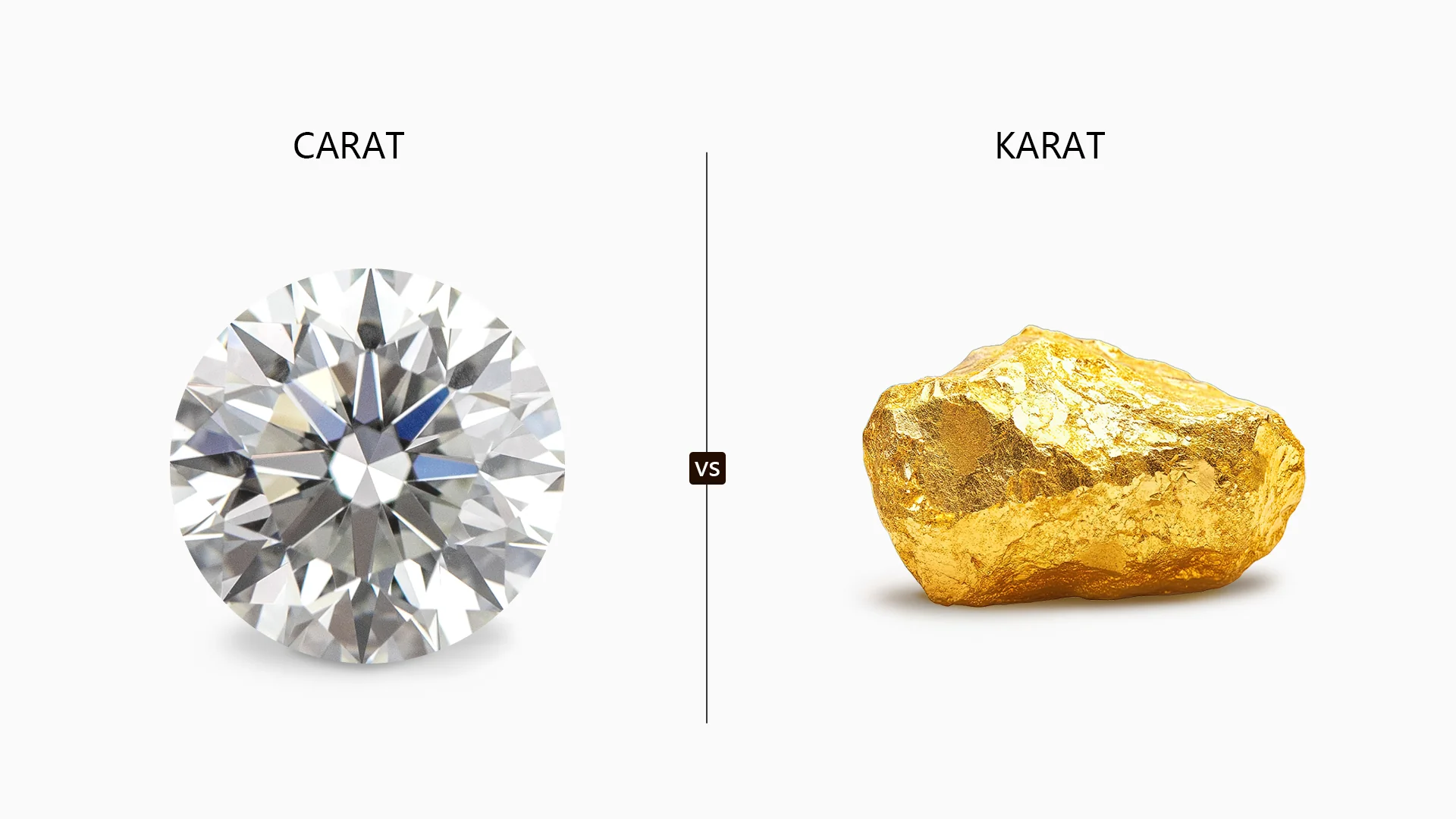
“Carat” and “carat” sound the same, yet they measure different things. A carat with a small “c” is a unit of weight for diamonds or other gemstones. Karat (with a “k”) is a measure of the purity of gold, such as in 14-karat or 18-karat gold. A diamond is measured in carats; a gold setting is measured in karat purity. This confusion between the two is a common source of misunderstanding for rookie buyers.
The Budget Sweet Spot: Why 0.90 Carats Can Beat 1.00
The price of diamonds does not increase linearly with carat weight but leaps at particular round-number cutoffs: 0.50, 0.75, 0.90, 1.00, 1.50 and 2.00 carats. Buyers want a 1-carat or 2-carat diamond, not a 0.93-carat diamond; thus, vendors will price accordingly, with a focus on full and half carat figures. A 0.90 to 0.99 carat diamond can be a perfect twin of a full 1.00 carat stone of the same form and cut, well within normal measurement deviations, but will be worth significantly less merely because it is not quite there.
A particularly essential (although slightly nuanced) tip on diamond carat weight is this: if you are budget conscious, you can typically get a same-size and quality diamond for much less money by buying carats just under the next decimal point (0.90 vs 1.00, 1.90 vs 2.00, etc.). When considering stones, it’s important to ask questions about specific attributes instead of just looking at the carats.
How Setting Style Affects Perceived Size
No matter the exact carat weight, the setting around a diamond can affect the size it appears to be. A halo setting is a circle of smaller accent stones surrounding the core diamond. This enhances the optical surface area of the center stone, and hence the perceived size. Usually this adds a quarter to half a carat, depending on the size of the halo. A thin band will go nicely with the stone and make the stone look bigger. A heavy band may make a stone look smaller by comparison. Generally, a diamond will look smaller in a bezel setting (where the edge of the stone is enclosed by the metal) than a prong setting (where the diamond is exposed to more light and view).
Cut does not affect the actual carat weight of the diamond, but it does affect the size of the diamond on the hand and should be taken into consideration with the carat number, especially if you are on a budget and want to boost the appearance of size, not just the number on the certificate.
Carat Isn’t the Only Factor Worth Optimizing
Carat weight gets the most attention because it is the easiest number to compare, but it is only one of the 4Cs, and not the one with the biggest effect on how a diamond actually looks. The shape of a diamond determines how it reflects light and, thus, impacts its brilliance and sparkle; a well-cut diamond, even if it’s somewhat less in carat weight, can appear more brilliant than a larger, poorly cut gem. So if you’re choosing between a better cut grade and a bigger carat weight for the same price, the better cut is usually the better upgrade.
This is also where shape and carat weight come into play for the budget for color and clarity. Larger appearing extended shapes such as oval or pear may let you spend less of your budget on Carat Weight and more on a better Cut or Clarity grade, finally getting you a stone that looks like a round diamond priced much higher.
How Many Carats Should You Buy?
What is the best carat size? There’s no right answer. It’s all about your budget, ring size and personal taste. A given carat weight may appear slightly larger on someone with smaller hands and fingers, because there is less surrounding digit to compare it to. Conversely, larger hands can make the same stone seem more conservative. It’s important to get the right size ring since a wide band will take away from the stone, while a thin band will let the diamond take center stage.
Usually limitations are mostly financial constraints, and this is where the shape-by-shape scaling discussed above is really useful. If a 1 carat round diamond is out of your budget, a 0.90 carat round or 1 carat oval, pear, or marquise might give you a similar or larger look for a lot less money because you are using the size chart to your advantage.

Finding Your Carat Weight
We’ve broken out our inventory by weight to make this easier to browse directly: 1 carat, 2 carat, 3 carat, 4 carat, and 5 carat. Each page lets you compare real stones at that weight across every shape we carry.
FAQ
What does diamond carat weight actually measure?
Size, not weight. One carat (200 mg). A diamond’s apparent size depends on its form, proportions, and cut depth, not just its carat weight.
How big is a 1 carat diamond?
A well-made 1 carat round diamond will be about 6.5mm in diameter. Long shapes like ovals or marquises of equal weight look bigger from above, in the range of around 7.7 to 10mm at the widest point.
Is a 2 carat diamond twice the size of a 1 carat diamond?
No. Its weight is exactly double, but because of the cubic relationship between weight and the dimensions of a diamond, a 2-carat round is only about 26 percent wider than a 1-carat round, not twice as wide.
What is the difference between carat and karat?
The weight of a diamond is expressed in carats. Karat is a measure of the purity of gold. They may sound the same, yet when used with a piece of jewelry, they mean something totally different.
Which diamond shape looks biggest per carat?
Long shapes, including marquise, oval, and pear, usually have more apparent size per carat because their mass is spread over a larger perimeter. Cuts that are square and near-square, like the princess and asscher, tend to appear smaller when compared by weight.
Does the setting affect how big a diamond looks?
Yes. A thin band or a halo setting can make a diamond appear larger, even if the carat weight of the stone does not change.
Why do diamond prices jump at 1.00 or 2.00 carats?
Demand tends to cluster around a whole number, so merchants will pay a premium for whole-carat stones. For example, a 0.90 to 0.99 carat gemstone can look identical to a 1.00 carat gemstone yet cost less.
Is a bigger carat weight always better?
Not necessarily. The quality of the cut makes a bigger difference to the look of a diamond than carat weight alone, and a little diamond with a good cut might look better than a larger diamond with a poor cut. Carat is just one thing to consider, not the only thing that’s worthy of improvement.