If you search IGI vs. GIA, most answers are like, “GIA is the only standard and hands down.” This is true of natural diamonds, and GIA’s lofty reputation is deserved and mostly uncontested. The honest answer on lab-grown diamonds is different every year. GIA has modified its approach 3 times since 2007. IGI has had a stable grading process since 2005.
If you have not already, our lab-grown vs natural diamonds guide and our 4Cs of diamonds guide cover the fundamentals this piece builds on.
IGI vs. GIA: The Quick Answer
Neither is a degree mill, and both the IGI and GIA are widely recognised and reputable gemological laboratories. IGI vs. GIA is an interesting topic if you’re only looking at lab-grown diamonds, because this is where the two labs have pursued different paths. GIA and IGI offer full individual grading for natural diamonds. The difference between IGI and GIA is negligible. That differentiation with lab-grown diamonds is genuine, and has been for most of the past 2 decades.
What Each Lab Actually Does
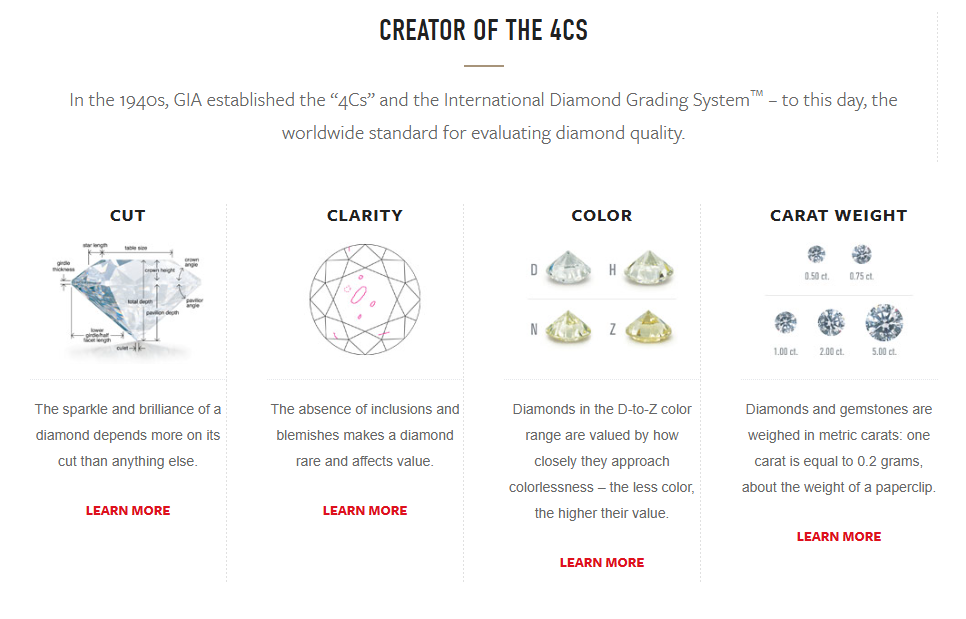
GIA, the Gemological Institute of America, was founded in 1931 and developed the 4Cs system and the D-to-Z colour scale that are still used in the industry today. It is the world’s premier certification authority for natural diamonds and a GIA report on a natural diamond is the de facto standard in practically every diamond transaction.
IGI, The International Gemological Institute, was created in 1975 and has more laboratories in more countries than the GIA. Over the past two decades, IGI has risen to become the world’s leading certifying authority for lab-grown diamonds by volume, due to its rigorous testing of lab-grown stones, even before GIA granted them equal status to natural diamonds.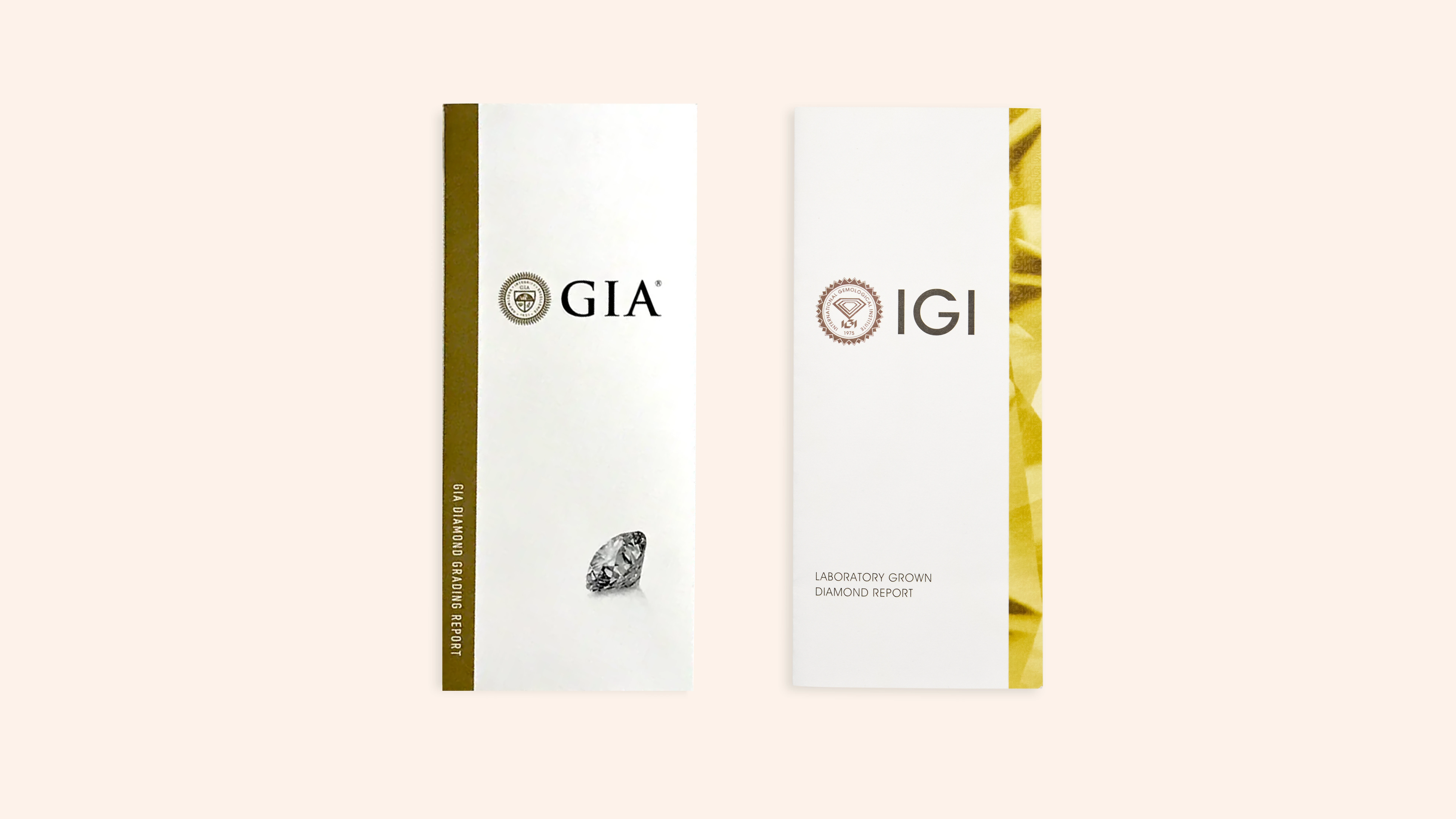
Does GIA Certify Lab-Grown Diamonds At All?
Yes. A question that people ask a lot about this is whether GIA certifies lab-grown diamonds. Yes, GIA has been grading lab-grown diamonds since 2007. The typical mistake stems from the difference between the GIA lab-grown diamond reports and GIA’s natural diamond reports, which now, as of October 2025, have diverged even more with the introduction of a Premium or Standard tier in lab-grown reports against specific grades.
GIA’s Lab-Grown Grading History: Three Changes Since 2007
This part of the IGI vs GIA comparison is commonly neglected in many papers, but here I offer the real timeline based on published studies from GIA.
- 2007: GIA began issuing reports for lab-grown diamonds in 2007; however, the diamonds are generally classified within a clarity and colour range rather than receiving a precise grade.
- 2019: GIA renamed the document the GIA Laboratory-Grown Diamond Report and added traditional colour and clarity scales for reference, but did not assign specific grades.
- 2020: GIA moved to a full individual colour and clarity grading for lab-grown diamonds, bringing the same rigour that it applies to grading natural diamonds to lab-grown diamonds.
- 2025: GIA will return to a two-tier system and will substitute individual grades with Premium or Standard designations.
Over 18 years, three changes in approach represent significant evolution in the methodology of a single laboratory for one type of diamond, and it is remarkable that over this period the methodology of GIA for natural diamond grading has not changed at all. The instability has proven specific to organisms grown in laboratory conditions.
What About Other Labs?
GCAL and a few other smaller labs also certify lab-grown diamonds, and you may find their reports on the marketplace. The two labs that matter for the vast majority of lab-grown diamonds sold worldwide are IGI and GIA, and they are the two names customers actually recognise when perusing reports. We are not comparing them. Before accepting an unknown laboratory report, check it out.
IGI’s Approach Since 2005: Consistent, Full Grading
IGI has been offering full D-to-Z colour and FL-to-I3 clarity grading for lab-grown diamonds since 2005, two years before GIA’s introduction of grading for such products. “That methodology has been the same ever since. IGI, however, has always been able to give you information on the exact colour and clarity grades of a lab-grown diamond if you want a report, unlike GIA, where there are continual inconsistencies.
The 2025 Policy Change, In Plain English
Our 4Cs of diamonds guide covers this change in detail, but the short version is important too. “The lab-grown diamonds GIA is seeing have become so uniform in terms of colour and clarity that more than 95 percent are now in a tight range of high quality and individual grading is no longer effective in separating one gem from another,” the GIA said.
There is likely a realistic economic context, too. The falling price of lab-grown diamonds means that the cost of grading each stone is becoming a larger portion of the value of the stone, and some in the industry have speculated that’s why GIA has shifted its focus away from lab-grown stones and toward natural stones, where prices and grading revenues are still high.
If you are talking about changes to GIA lab-grown diamond grading, the change being referred to is the one happening in October of 2025. It is the third change in GIA’s lab-grown approach since 2007, and the only one that deletes detail rather than adding to it.
How to Read an IGI Report vs. a GIA Report
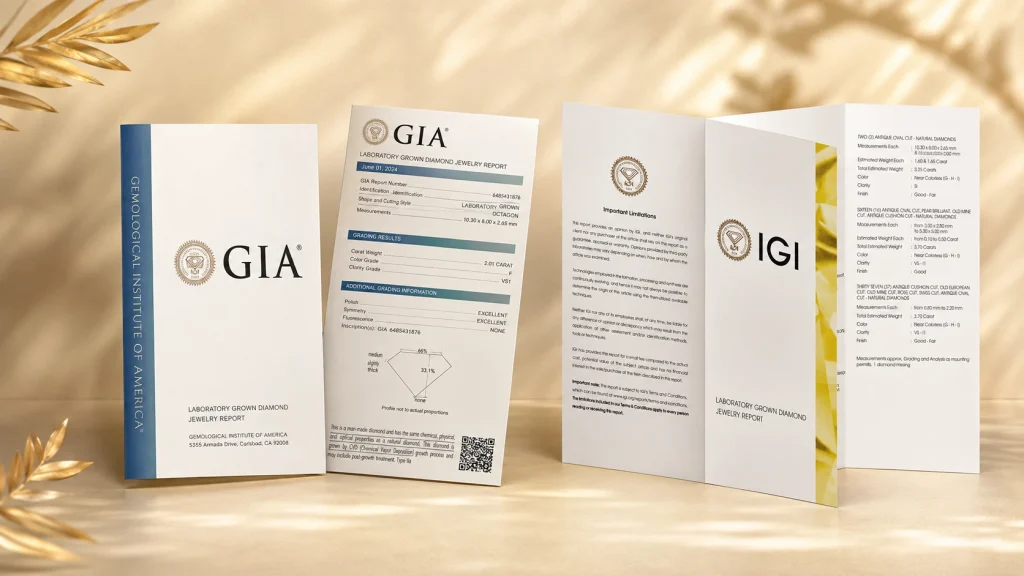
The shape and cut, an exact colour grade such as F, and an exact clarity grade such as VS1 will be included in an IGI report for a lab-grown diamond, with the cut, polish and symmetry ratings, carat weight and laser inscription number. It’s really the same as a natural diamond report except for the listed growth procedure.
For lab-grown diamonds, a GIA report issued after October 2025 will state the shape, a Premium or Standard designation, instead of a specific colour or clarity grade, carat weight, the growth method, either HPHT or CVD, and a laser inscription number. The stone may have the same property; yet the difference is just in the degree of information in the report. The answer is a practical one to a question often asked by consumers: While GIA certification reports for lab-grown diamonds are valid, they do not give the exact colour and clarity grade as an IGI report does.
The difference in details is more important than it sounds when you are comparison shopping side-by-side. Two lab-created diamonds, both Premium-rated by GIA, might nonetheless be vastly different in colour or clarity within that classification, information that would only be found on an IGI report.
Why Certification Detail Matters More When You’re Buying Online
When you are in a jewellery store, you have the chance to see the stone yourself, compare it to other pieces, and ask a salesperson to explain the differences. Buying loose diamonds online cuts out just about all of that. The grading report is the only authentic reference you have for the exact stone in front of you, not a comparable or average specimen, but that unique diamond.
This is where the distinction between IGI and GIA for lab-created diamonds surpasses basic technicalities to influence your buying decision. Two gemstones graded Premium on a GIA report may have differences in colour or clarity that are not visible without a particular grading. The IGI report eliminates the guesswork and tells you exactly where the stone originated. That is the kind of thing you would anticipate for any diamond you acquire without being able to view it yourself beforehand.
Why Culture Carats Certifies Through IGI
Since every stone we carry is lab-grown, we want buyers to see the exact grade they are paying for rather than a broad tier. That is the practical reason our full inventory is IGI certified rather than GIA certified, and it is also why we do not carry GIA-certified lab-grown diamonds at all right now. You can see exactly how we apply that standard on our How We Grade page.
FAQ
Is IGI or GIA better for lab-grown diamonds?
More information on lab-grown diamonds, including the full individual colour and clarity grades, is provided by the IGI. GIA is a respected laboratory, but starting October 2025 it will only grade lab-grown diamonds as either Premium or Standard.
Does GIA still certify lab-grown diamonds?
Yes, GIA does still issue reports on lab-grown diamonds, in fact, but from October 2025 these reports will be on a two-tier Premium or Standard system rather than actual colour and clarity grades.
Why did GIA stop giving detailed grades to lab-grown diamonds?
GIA said the lab-created diamonds it grades today are so similar in colour and clarity that separate grading is no longer an effective means to differentiate the stones. The financial factors involved in the appraisal of lower-priced gemstones certainly contributed to the issue.
How long has IGI been grading lab-grown diamonds?
Complete individual colour and clarity grading has been available since 2005, two years prior to GIA introducing grading for lab-created diamonds.
Is a GIA certified lab-grown diamond lower quality than an IGI certified one?
Not compulsory. The stone can be similar in quality regardless of the procedure. The difference is the report detail, not the real diamond quality.
Why does Culture Carats use IGI instead of GIA?
All of our inventory is lab-grown stones, and IGI offers the buyer the specific colour and clarity grade of the particular diamond being seen instead of a broad classification.
Does GIA certify lab-grown diamonds?
Yes, GIA has been grading lab-grown diamonds since 2007. The amount of material that should go into the certificate has been revised many times, most recently to define a Premium or Standard tier effective October 2025.
Are man-made diamonds GIA certified the same quality as IGI certified ones?
In either case, the foundation stone could be the same. The certification laboratory does not judge the quality of the diamond but rather notes the degree of information available in paperwork on that quality.