Get upto 30%* off on your First order

Get upto 30% off on your order
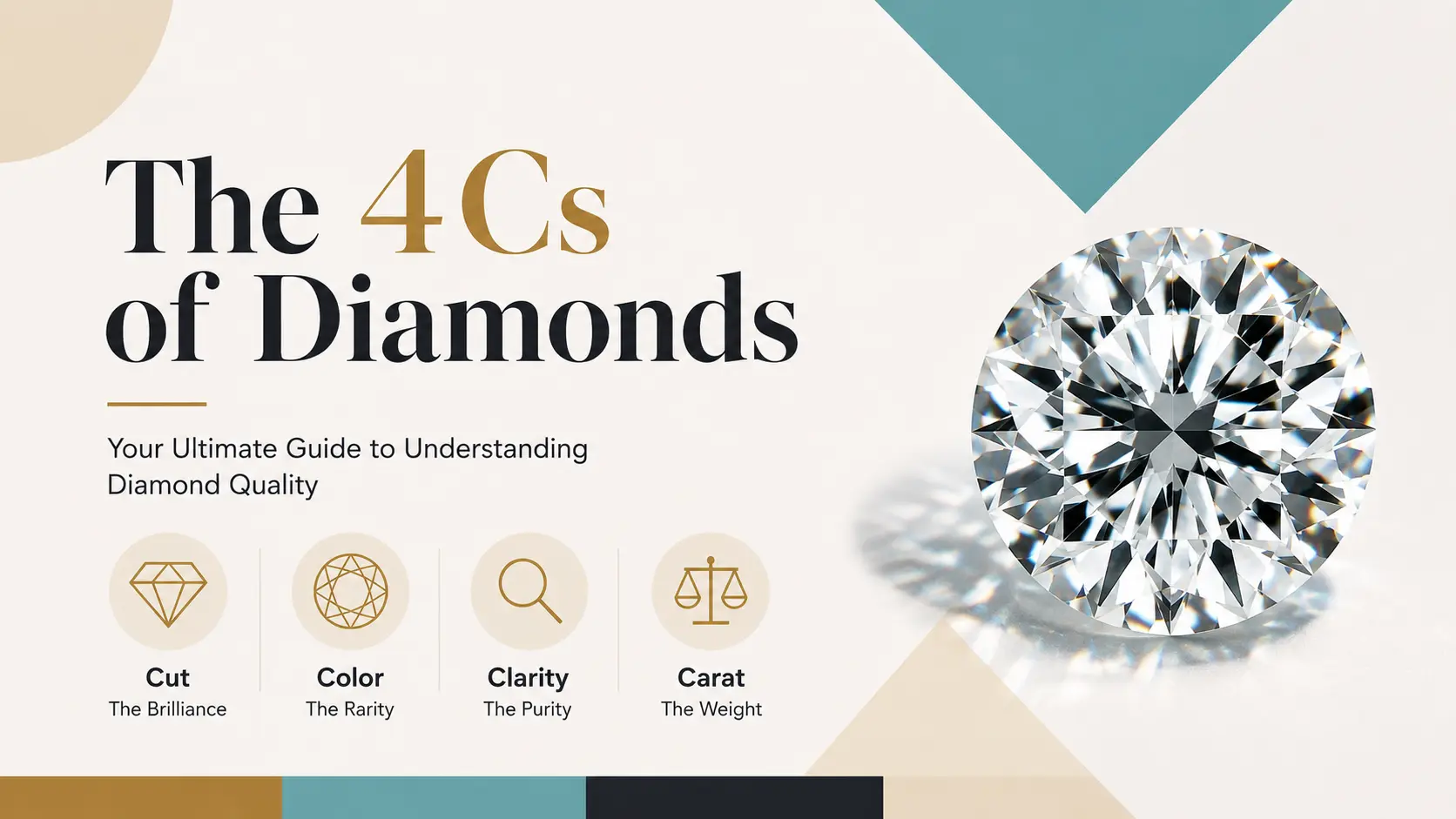
What Are the 4Cs of Diamonds?
In the 1940s, GIA founder Robert Shipley developed the 4Cs: Cut, colour, clarity and carat weight, to help consumers distinguish diamonds. Over the following decades, GIA extended the concept into a complete grading system, adding the D to Z colour range in the 1950s and introducing a unique cut grading system for round brilliant diamonds in 2006. The 4Cs are the internationally accepted standard for determining diamond quality and are used by GIA, IGI and all reputable labs in the industry for both natural and laboratory grown gems.
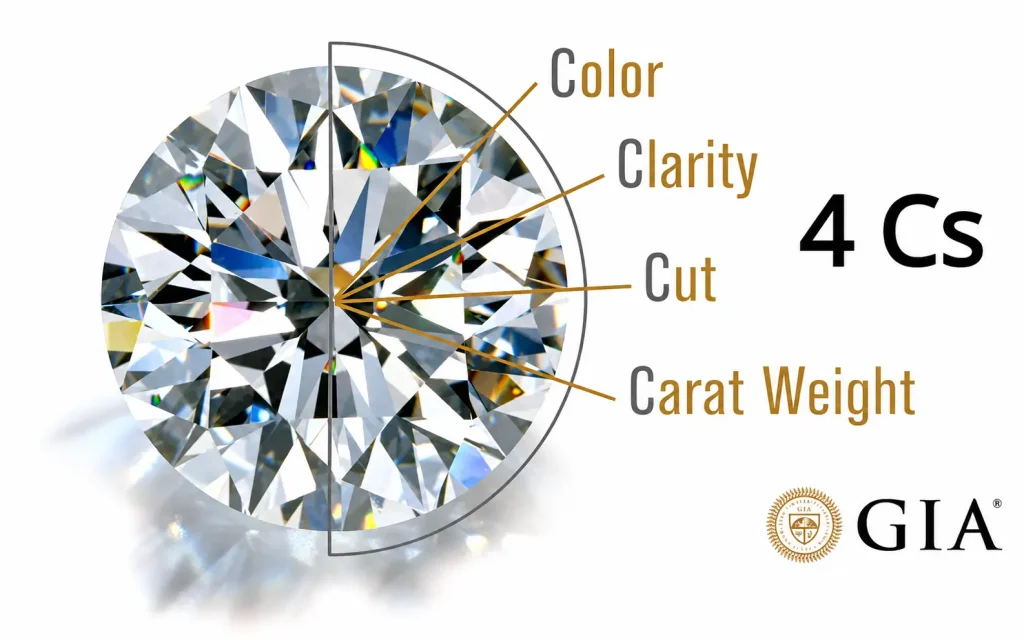
Cut: The Most Important C
Of the four criteria that determine how a diamond looks, cut is the most important. The cut is the only characteristic of a diamond that can be altered by an individual, and it affects how the stone reflects light as brilliance, fire and scintillation, whereas colour and clarity are inherent attributes. An Excellent cut diamond will sparkle more than a larger diamond with a worse cut, since it reflects more light that hits it. GIA grades diamonds on a scale from Excellent to Poor, while IGI uses an equivalent Ideal to Poor method. If on a tight budget and forced to choose between the 4Cs, cut stress.
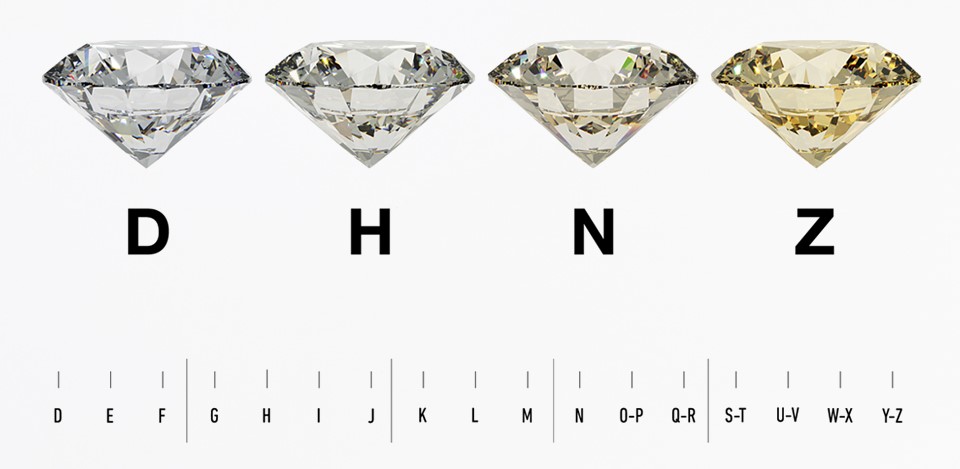
Color: The D to Z Scale Explained
Diamond colour grading refers to how close the stone is to being colourless and not to the strength of the hue. The grading scale is from D, which is completely colourless and the rarest, to Z, which has a noticeable yellow or brown tint. Most buyers will choose stones around the G to J range for engagement rings as they look almost colourless but will be far less expensive than D or E grade diamonds. Lab-created diamonds are commonly made at the high end of this range, which has caused GIA to change the way it reports colour for lab-grown diamonds, as detailed below.
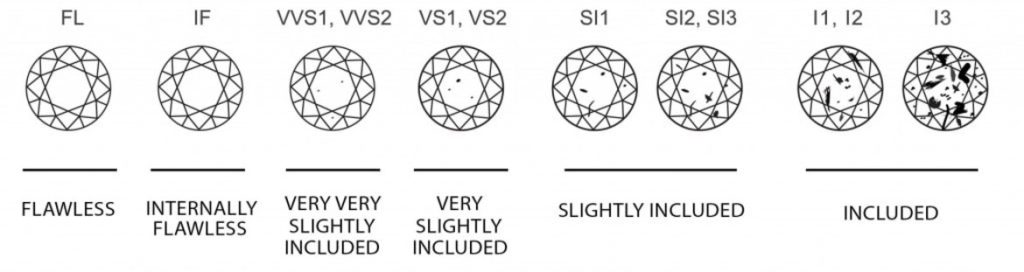
Clarity: The FL to I3 Scale Explained
Clarity refers to the internal and exterior faults of a diamond, from Flawless, with no inclusions visible at 10x magnification, to Included, where blemishes are visible with the naked eye. Most of the grading range from VVS to SI1 is concerned with defects that are invisible to the naked eye, and require a jeweler’s loupe to see. With the naked eye, you may not be able to see the difference between a VS1 or SI1 diamond and a flawless diamond, and this is where many buyers find huge discounts.
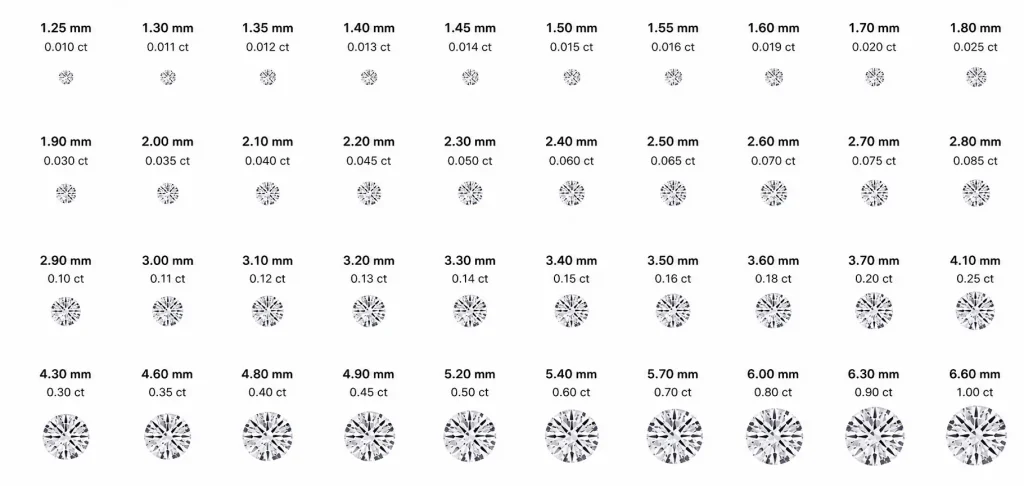
Carat: Weight, Not Size
Carat is a measurement of weight, not size. One carat is 200 milligrams. The size of two diamonds of the same carat weight may differ in their cut and shape. A well-cut diamond will spread its weight across a wider area that can be seen. A deep diamond that is not cut well may be heavier, yet appear small from the top. The first thing that most buyers notice is the carat, and this is something that should be considered in relation to the cut, not pursued on its own.
The 2025 Shift: Why GIA Stopped Giving Lab-Grown Diamonds Detailed Grades
Most of the 4Cs manuals have not yet dealt with this. Effective 1 October 2025, GIA will stop issuing specific D-Z colour classifications and FL-I3 clarity grades for lab-grown diamonds. Instead, all GIA-graded laboratory-grown gemstones now fall into one of two categories.
- Premium: D-equivalent color, VVS clarity or better, Excellent polish and symmetry, and for round brilliants, an Excellent cut grade
- Standard: E to J color, VS clarity, Very Good polish and symmetry (Good permitted for some fancy shapes), and Very Good cut for round brilliants
A lab-grown diamond that does not meet the Standard threshold does not receive a GIA report at all.
GIA’s rationale for the change is simple. The vast majority of lab-grown diamonds on the market are generally in a narrow range of colour and clarity, with more than 95 per cent of them, so the full grading system developed for the wide natural variation of mined diamonds cannot effectively differentiate between the lab-grown stones. Natural diamonds are still immune. GIA continues to offer complete 4Cs assessments for these.